Home /
About Ramsgate /
News / Allotments in the age of COVID-19
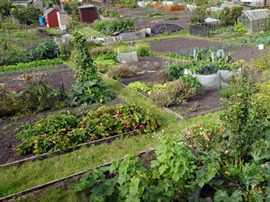
Allotments, those little green spaces in urban areas, have made a comeback and the pandemic has increased further demand for plots. Since their heyday in the 1950’s many allotments have been lost to neglect, disinterest, and the desire to turn urban green space into development land.
Some estimates have suggested that at one time there were up to 1.75m allotment plots. Today there are estimated to be between 300,000 and 350,000 allotment plots an overall drop of 80% since that high point. Here in Ramsgate, there are still three main sites and two smaller ones, but even here, there have been substantial losses.
The history of allotments is interesting as their origins date back to the medieval strip or open field farming systems, but modern allotments date back to the early 20th century. From 1908 to 1950 statutes were enacted to encourage and protect allotments from being sold off or redeveloped; new legislation is well overdue.
Land acquired for the purposes of allotments has ‘statutory protection’, which means that if a council wants to sell the land or repurpose it in some way, it must get the permission of the Secretary of State for Housing, Communities and Local Government. Many allotments do not even have this protection. Two sites in Ramsgate fall under that category.
In practice, removing statutory protection is not as hard as it sounds, and many allotments have been lost, as councils sell them for development.
Allotments require land, but they are given a low priority. This is a pity because allotments are not only good for health and wellbeing but can put the garden into garden suburb or Town.
Unfortunately, many local plans look at allotments as a resource and not as a solution, allotments can be an antidote to soulless estate developments.
Just how popular allotments are can be shown by the fact that Ramsgate Town Council has never had less than 90 on its allotment waiting list and currently it has nearly 250 potential tenants. There is something therapeutic in growing your own and many have sought solace in recent months by taking up gardening. Allotments are one way that those with small or no gardens can connect with the soil.
As allotments have changed and adapted to changing social trends, so have allotment tenants. The old image of a male, shed based pastime, has gone; today, allotment tenants reflect today’s society in all its many social variations, which makes allotment gardening a cause worth saving and promoting for so many positive social reasons.
Written by:
Richard Styles,
Town Clerk