Home /
About Ramsgate /
News / NEW FIVE POUND NOTE WELCOMED BY PUGIN’S CENTRE IN RAMSGATE
The new Bank of England five pound note, displayed at Winston Churchill’s home in Kent yesterday, has been welcomed by the National Pugin Centre in Ramsgate, Kent, for the use of Augustus Pugin’s designs on the note.
The iconic Pugin-designed ‘Big Ben’ clock is featured on both sides of the note. A finely-detailed image of the Elizabeth Tower – which houses ‘Big Ben’ – is one of the new security features of the note. It appears gold on the front and silver on the back.
‘Big Ben’ also appears on the back, as part of the Houses of Parliament which is the world-famous backdrop to an image of Winston Churchill.
The new note is launched during works in advance of the opening of the National Pugin Centre in Ramsgate.
The National Pugin Centre, which is Heritage Lottery funded and due to open in 2017, is based at Pugin’s own site in Ramsgate. The site is Pugin’s model of his famous ‘true principles’ of architecture. It is the only place Pugin built exactly as he saw fit, as he was ‘both paymaster and architect’ (as he wrote in 1850). The Centre is currently under construction on this Grade I listed site.
The Centre will be housed in original buildings attached to the church (St Augustine’s) that Pugin built in Ramsgate. It will comprise a visitor centre, a research room, and the church interior is being restored to Pugin’s original designs. The church remains a working church as part of the Archdiocese of Southwark. In 2012 it was designated the shrine of St Augustine of England, the first Archbishop of Canterbury, who landed very close to the site in AD 597.
Fr Marcus Holden, Rector of the site, said, “We’re really pleased that Pugin’s work has captivated the designers of the new five pound note. Ramsgate was so important to Pugin, and it’s fantastic that the Heritage Lottery Fund, the Andrew Lloyd Webber Foundation, and other generous donors are backing the new Centre here in Ramsgate. How amazing to think that Pugin’s designs, which came out of Ramsgate, will be in people’s wallets on the new five pound note for years to come.”
Augustus Pugin, who is most famous for designing much of the Houses of Parliament alongside Charles Barry, led the Gothic Revival in the first half of the nineteenth century. His rediscovery and accurate use of medieval design changed civic, domestic, and ecclesiastical architectural thought. His interior designs (the House of Lords is one of his most famous), were made in accordance with his principles of being functional and decorative. Modern architecture and design continues to benefit from his legacy.
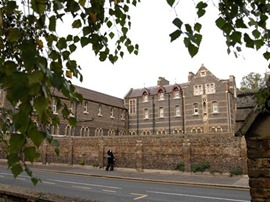
Pugin is buried in the church on the Ramsgate site, alongside members of his family. Next door are his family home and presbytery, both now owned by Landmark Trust. Across the road is the former monastery, built by Pugin’s sons, in accordance with his vision, from 1861. Pugin moved to Ramsgate in 1843 at the age of 31 and died there in 1852. In his lifetime he designed over 200 buildings or parts of buildings.